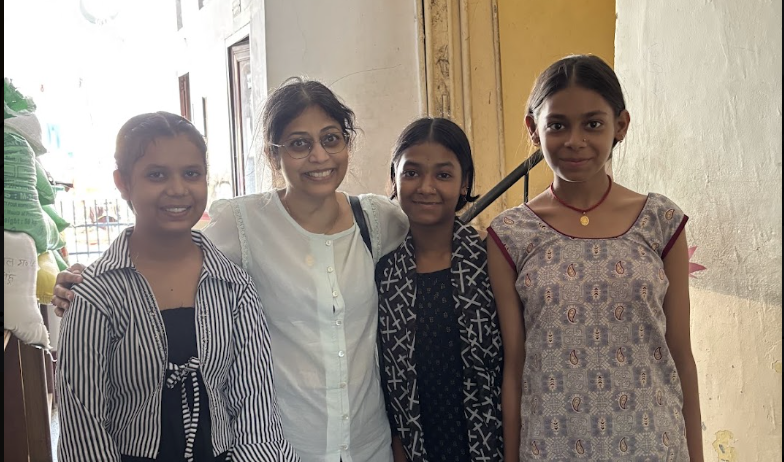
Sometimes, What a Young Person Needs Most Is Someone Who Sees Their Potential
A mentor does not need to have all the answers. Sometimes their most important role is to listen, ask the right questions and help a young person recognise possibilities they may not yet see for themselves.
That belief sits naturally with Meghna S. Jaruhar’s approach to work and mentorship. Across a career spanning design, entrepreneurship, education, leadership and inclusion, one principle has remained central to her work: when people feel seen, respected and supported, they are better able to do their most powerful work.
Today, she brings that same philosophy to her role as a mentor with Project Aarohan.
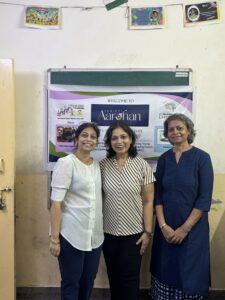 Meet Meghna
Meghna is an entrepreneur, designer, leadership professional and inclusion specialist based in New Delhi. She is currently the Founder and Designer of LAARC Lifestyle, a fashion label centred on thoughtful design, craftsmanship and conscious creation. She is also the founder of Talking Corner, where her work includes women’s leadership, neurodiversity, POSH training and creating mentoring and training journeys for underserved communities.
Her career has moved across industries and disciplines—from fashion design and entrepreneurship to EdTech, partnerships, product development, diversity and inclusion, and women’s leadership. What connects those seemingly different experiences is a sustained interest in people: how they learn, how they grow and what enables them to recognise their own capabilities.
It is this breadth of experience that she brings into conversations with young people.
A Career Built Across Design, Business and Education
Meghna’s professional journey began in fashion and product development, working with Indian and international businesses before establishing her own design and manufacturing venture. She later moved into education and leadership, spending several years at Harappa Education across partnerships, strategic initiatives, product marketing, insights and DEI.
She subsequently became Practice Lead for Women’s Leadership and Open Programs at Jombay, where she conceptualised the 1000 Women Leaders Movement and worked on programmes spanning women’s leadership, HR leadership and managerial excellence.
Her education reflects that same multidisciplinary journey. Meghna holds an MBA from the University of Hong Kong, where she was named to the Dean’s Honors List, and a BA in Fashion Design from the University of the West of England. She has also undertaken specialist training in Diversity, Equity and Inclusion through Cambridge University’s Judge Business School and completed Level 3 training in Neurodiversity & Inclusion.
The result is not simply a long résumé. It is exposure to very different kinds of people, workplaces, decisions and challenges—and an understanding that careers rarely follow one perfectly straight line.
For a teenager beginning to think about the future, that can be an important perspective.
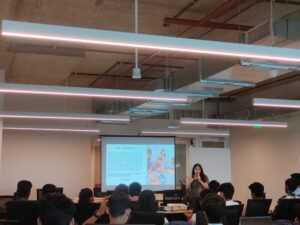 The Person Behind the Mentor
Across Meghna’s professional work, one theme appears repeatedly: helping people develop confidence and capability.
In fashion, that has meant thinking about clothing as a language of confidence, identity and quiet strength. In leadership development and DEI, it has meant designing programmes that build awareness, capability and culture. Through Talking Corner, it includes developing training and mentoring journeys intended to create impact in underserved communities.
Mentorship brings those ideas into a much more personal space.
Young people do not always need someone to tell them what to do. They need adults willing to listen without immediately judging, to expose them to possibilities and to help them ask better questions about themselves.
What am I good at?
What interests me?
What could I become?
And perhaps most importantly: what is possible for someone like me?
Why Mentorship Matters
The transition from school to adulthood can be filled with decisions. Subjects, higher education, vocational training, careers, relationships, confidence and independence can suddenly feel connected to choices a teenager is expected to make before they have experienced much of the world.
This is where an experienced adult can make a difference.
A mentor can make the unfamiliar more understandable. They can talk honestly about careers, mistakes, changing direction, workplace realities and the fact that few successful lives unfold according to a perfect plan.
Meghna’s own career offers a useful example. It has moved from fashion design and manufacturing into business, EdTech, leadership development, DEI, entrepreneurship and back into fashion as a founder.
For a young person, there is an important lesson within that journey: your first decision does not have to define your entire future.
Why Project Aarohan
Project Aarohan’s approach to mentorship goes beyond occasional career advice. Mentorship is intended to complement educational opportunity by helping students develop confidence, awareness, practical tools and a stronger understanding of the possibilities ahead of them.
That philosophy aligns closely with Meghna’s professional experience. Much of her work has involved designing learning and leadership programmes, building mentoring journeys and helping individuals develop the confidence and capability to progress.
The connection is particularly relevant for students who may have had limited exposure to different professions or career journeys.
A mentor cannot decide a child’s future for them.
But they can make that future feel wider.
What Meghna Brings Into the Mentoring Room
A career of more than two decades means Meghna can bring professional experience into the room—but experience alone does not make someone an effective mentor.
Listening does. Her work across leadership, inclusion and learning has involved working with people from different backgrounds, designing programmes around their needs and translating complex ideas into practical development. Her CV describes an approach built around both knowledge and empathy. For young people, that combination matters. A useful mentoring conversation should not feel like another classroom or another adult telling them what they should become. It should give them space to think, to question and to speak. Eventually, to make decisions with greater confidence.
What Children Need Beyond Academics
Education gives young people knowledge. But preparing for adulthood requires more than academic performance. Young people need confidence to speak up. They need exposure to possibilities outside their immediate surroundings. They need practical life skills and career awareness. They need emotional safety to ask questions without worrying that the question is foolish. Most importantly, they need consistency. One inspiring conversation can matter, but trust develops when someone continues to show up. Over time, a mentor can become a steady adult presence who asks about progress, remembers an earlier conversation and encourages the student to keep going. That is where mentorship becomes more than advice.
It becomes a relationship built around possibility.
Mentorship Changes the Mentor Too
There is a tendency to think about mentorship primarily in terms of what the adult gives the student. But meaningful mentoring asks something of the mentor too. It requires patience. It requires listening before responding. It asks adults to explain ideas without assuming that their own experiences are universal. And it reminds them that opportunities and career pathways that seem obvious after decades in the workplace can look completely unfamiliar to someone encountering them for the first time. Perhaps that is one of mentorship’s greatest strengths. Both people enter the conversation with something to learn. For Meghna – the best gift of being a mentor has been a stripping of assumptions and a genuine curiosity for life and its many versions.
A Message to Young People
If there is one idea that Meghna’s professional journey demonstrates, it is that a career does not have to follow a straight line. Interests evolve. Opportunities emerge. Skills learned in one field become valuable in another. Sometimes the path you begin on leads somewhere completely unexpected. So remain curious. Ask questions. Be willing to learn and equally willing to change direction when you discover something new about yourself.
You do not need to have your entire future figured out today. You simply need the confidence to keep discovering what it could become.
One Professional. One Student. Many Possibilities.
There are thousands of professionals whose careers contain lessons a teenager has never heard.
Lessons about choosing a course.
Getting something wrong.
Changing careers.
Building confidence.
Handling rejection.
Becoming a leader.
Starting again.
Mentorship gives those experiences somewhere meaningful to go.
You do not need to be a CEO, educator or career counsellor to help a young person. You need experience, patience, curiosity and the willingness to listen.
Because sometimes the conversation that feels ordinary to an adult can become the conversation a teenager remembers for years.
Mentorship Is a Bond, Not an Intervention
At Project Aarohan, mentorship is not about changing a child overnight. It is about showing up, listening with care and helping a young person recognise their own strengths.
A mentor cannot promise a student an easy future. They cannot make every decision for them or remove every obstacle.
But they can make sure that, while the student is figuring things out, there is someone in their corner asking questions, offering perspective and reminding them that their circumstances do not have to define the limits of their ambition.
Become a mentor with Project Aarohan.
Your time, experience and guidance can help a child rise with confidence.
projectaarohan.org
Frequently Asked Questions
Who is Meghna S. Jaruhar?
Meghna S. Jaruhar is an entrepreneur, designer and leadership and inclusion professional based in New Delhi. She is the Founder and Designer of LAARC Lifestyle and the founder of Talking Corner, and her professional experience spans fashion, EdTech, women’s leadership, DEI, product development, partnerships and mentoring and training.
What is Meghna’s educational background?
Meghna holds an MBA from the University of Hong Kong, where she received a Dean’s Honors List Award, and a BA in Fashion Design from the University of the West of England. She has also completed specialist training in DEI through Cambridge University’s Judge Business School and Level 3 training in Neurodiversity & Inclusion.
What experience does Meghna bring to mentorship?
Her experience spans more than two decades across fashion, entrepreneurship, EdTech, leadership development, DEI, partnerships and programme development. She has designed and led learning initiatives, worked with diverse teams and created mentoring and training journeys for underserved communities.
Why are professionals valuable as mentors to young people?
Professionals can give students exposure to experiences and career paths they may not otherwise encounter. Beyond explaining jobs, mentors can share lessons about decision-making, resilience, confidence, workplace expectations and changing direction, while encouraging students to think independently about their futures.
Do I need to be a senior leader to mentor with Project Aarohan?
Mentorship is not simply about seniority or having all the answers. Professionals can contribute through their lived experience, willingness to listen and ability to offer young people perspective, encouragement and exposure to possibilities.
What can I contribute as a Project Aarohan mentor?
Your professional experience can help make the world beyond school more understandable to a young person. Mentors can encourage students to ask questions, explore careers, build confidence and develop a stronger understanding of their own interests and possibilities.
How can I become a mentor with Project Aarohan?
Visit projectaarohan.org to learn more about Project Aarohan and opportunities to contribute your time and experience as a mentor.