A Library Can Begin With Something as Simple as a Shelf
Think back to the books you encountered as a child.
Perhaps there was one story you read again and again. A book about space that made you curious about the universe. A biography that introduces you to a life completely different from your own. Or a character who stayed in your imagination long after you had turned the final page.
For many children, books are such a familiar part of growing up that it is easy to forget something fundamental:
Before a child can discover the joy of reading, a book has to be within reach.
Across India, many children studying in government schools and underserved communities have limited access to books beyond their textbooks. Some schools have only a small collection. Others have no meaningful library resources at all.
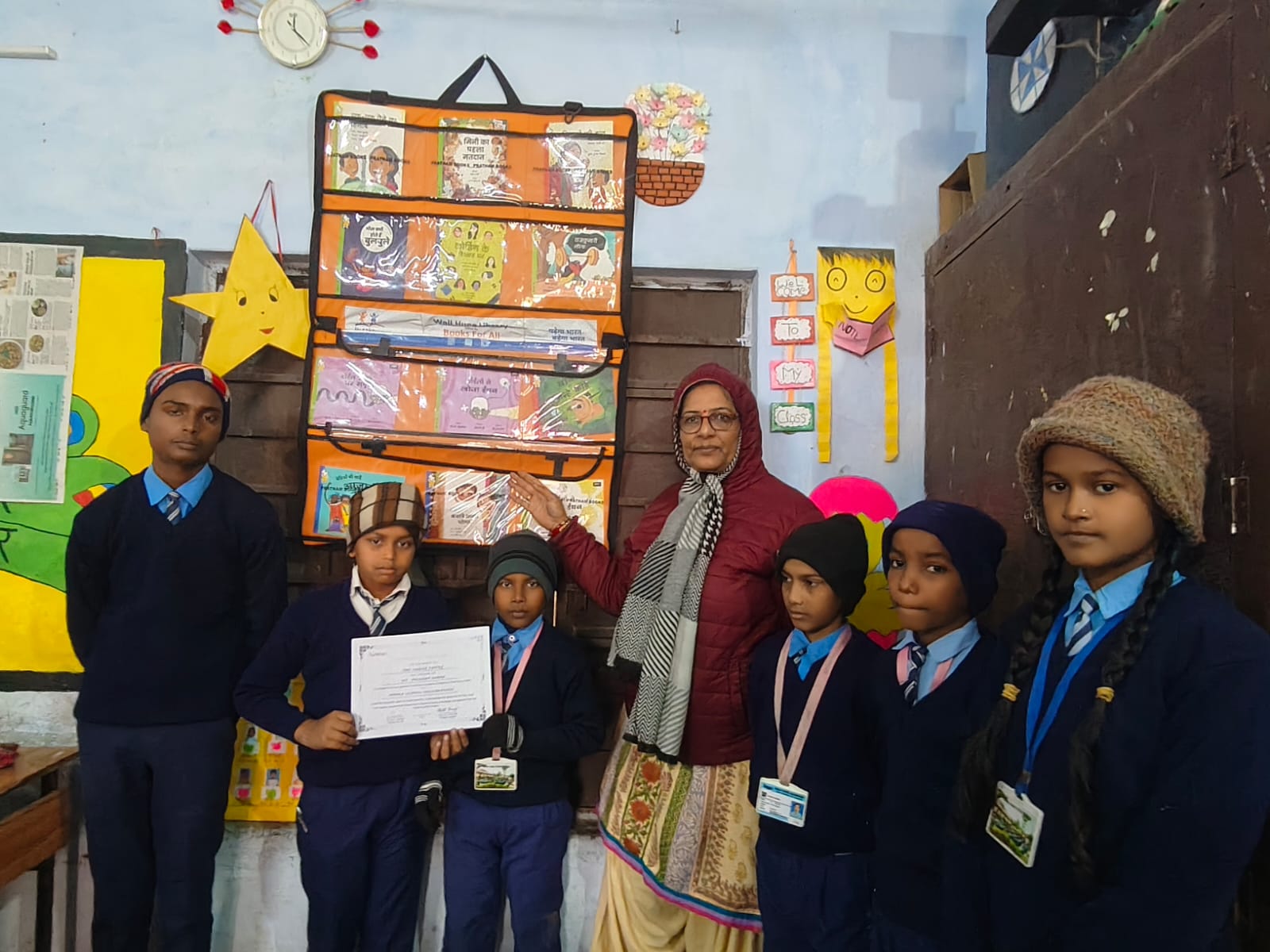
Over the years, Project Aarohan has helped establish or supply more than 40 libraries across India, reaching schools and communities in Jammu and Kashmir, Assam, Telangana, Rajasthan, Uttar Pradesh, Bihar, Maharashtra, Haryana, Tripura and Punjab.
Different states. Different languages. Different communities, but one need appears again and again – Children need access to books. And when that access is created, something remarkable can begin.
 Access Must Come Before Achievement
We often speak about improving literacy. We encourage children to read more. We want them to strengthen their vocabulary, comprehension and communication skills. But there is a simple question that has to come first:
What are they supposed to read?
A child cannot develop a reading habit without books.
They cannot discover their favourite story if they have never had the opportunity to browse a shelf. They cannot explore science, history, biographies, fiction or the wider world if their reading is limited almost entirely to prescribed textbooks. Building libraries across more than 40 locations has reinforced one of our most important lessons:
Access must come before achievement.
Before asking children to become readers, we have to give them something worth reading.
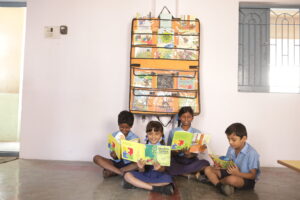 Every School Needs a Different Library
After working across communities in ten states, another lesson has become clear:
There is no single collection of books that works everywhere.
Children differ in age, reading abilities vary, interests vary. Also, languages vary.
The needs of a primary school classroom can be very different from those of teenagers preparing to think about higher education and careers.
That means building an effective school library is not simply about collecting as many books as possible. It is about collecting the right books.
 How a Project Aarohan Library Comes Together
Our library process is designed to be simple, personal and responsive to each school’s needs.
Step 1: A donor contributes
Donors sponsor a library and may request that their donation reach a particular village or location with personal, familial or sentimental significance. In case they do not have a specification, we choose from an existing list of schools that need libraries.
Step 2: The school shares its requirements
The receiving school advises us on the appropriate reading levels and languages. Most schools request books in two languages.
Step 3: We coordinate requests
Project Aarohan typically groups 5–10 library requests together so books can be prepared and dispatched efficiently.
Step 4: The books reach the school
Books are selected according to the school’s requirements and sent to the designated location.
Step 5: We commemorate the contribution
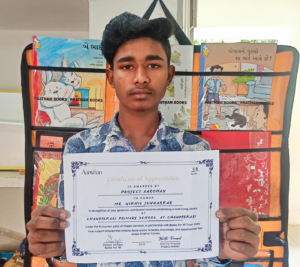
Project Aarohan provides a certificate to both the donor and the receiving library. Donors can dedicate their contribution in the name of a person or family, creating a lasting keepsake of the library they helped make possible.
The principle is simple: listen to what each school needs, connect it with people who want to give, and put the right books within children’s reach.
What 40+ Libraries Have Taught Us
Across our library initiatives, a few lessons continue to guide us.
Access comes first.
We cannot ask children to develop a love of reading if books remain unavailable to them.
The right books matter as much as the number of books.
Age, language, reading level and interest should shape every collection.
Variety creates discovery.
Fiction, nonfiction, biographies, science, history, general knowledge and inspirational reading give children different pathways into books.
Every reader needs an entry point.
Libraries should serve hesitant readers as thoughtfully as confident ones.
Teachers and school leaders matter.
Their involvement helps ensure that libraries remain active rather than becoming static collections.
Reading should be participatory.
Browsing, borrowing, discussing and recommending books turn reading into a shared experience.
Delivery is the beginning, not the end.
The larger purpose is to create a sustainable reading culture.
And perhaps the most important lesson:
The true impact of a library is not the number of books on its shelves. It is the curiosity those books awaken.
Why Project Aarohan Keeps Building Libraries
At Project Aarohan, we believe a child’s circumstances should not determine the limits of their imagination.
Education is not only about completing a syllabus, it is also about discovering possibilities. Books help make those possibilities visible. They introduce children to people they may never meet, places they may never have visited, ideas they may never have encountered or questions they may never have thought to ask.
That is why improving access to books remains an important part of creating stronger learning ecosystems for underserved young people. Every new library places more possibilities within reach. And every child who walks towards a shelf gets to decide which one to explore.
The Next Library Hasn’t Been Built Yet
More than 40 libraries is an achievement we are proud of, but it is not a finish line.
Across India, there are still schools where children have limited opportunities to read beyond their textbooks. There are still curious students waiting to discover their first favourite book. There are still shelves waiting to be filled. Companies can sponsor libraries as part of their social impact initiatives. Donors can help fund collections designed around the actual needs of recipient schools. Every contribution helps create something larger than a collection of books. It creates access, curiosity, confidence, imagination and opportunity.
Because somewhere, the next scientist may be waiting to discover her first science book.
The next writer may be waiting to encounter the story that makes him want to write one of his own.
And another child may simply be waiting to discover that reading can be something they love.
Help us build the next library and place a world of possibility within a child’s reach.
Frequently Asked Questions
How many libraries has Project Aarohan supported?
Project Aarohan has helped establish or supply more than 40 libraries across India, including initiatives in Jammu and Kashmir, Assam, Telangana, Rajasthan, Uttar Pradesh, Bihar, Maharashtra, Haryana, Tripura and Punjab.
Why are libraries important in government schools?
Libraries give children access to reading material beyond their prescribed textbooks. A varied collection can help students develop vocabulary, comprehension, curiosity, independent thinking and creativity while giving them opportunities to explore subjects and stories based on their own interests.
What kinds of books should a school library include?
A useful school library should offer books across different reading levels and interests. Collections can include fiction, nonfiction, biographies, science, history, general knowledge and age-appropriate inspirational books. Selection should also consider students’ ages, languages and reading abilities.
Can a company sponsor a school library in India?
Companies and organisations can support library initiatives and help expand access to books in underserved schools and communities. Sponsorship can help provide collections that respond to the specific needs of students and schools.
Why does Project Aarohan invest in libraries?
Project Aarohan sees access to books as an investment in children’s potential. Libraries can expose young people to ideas, stories and possibilities beyond their immediate surroundings and help build the curiosity and confidence that support lifelong learning.